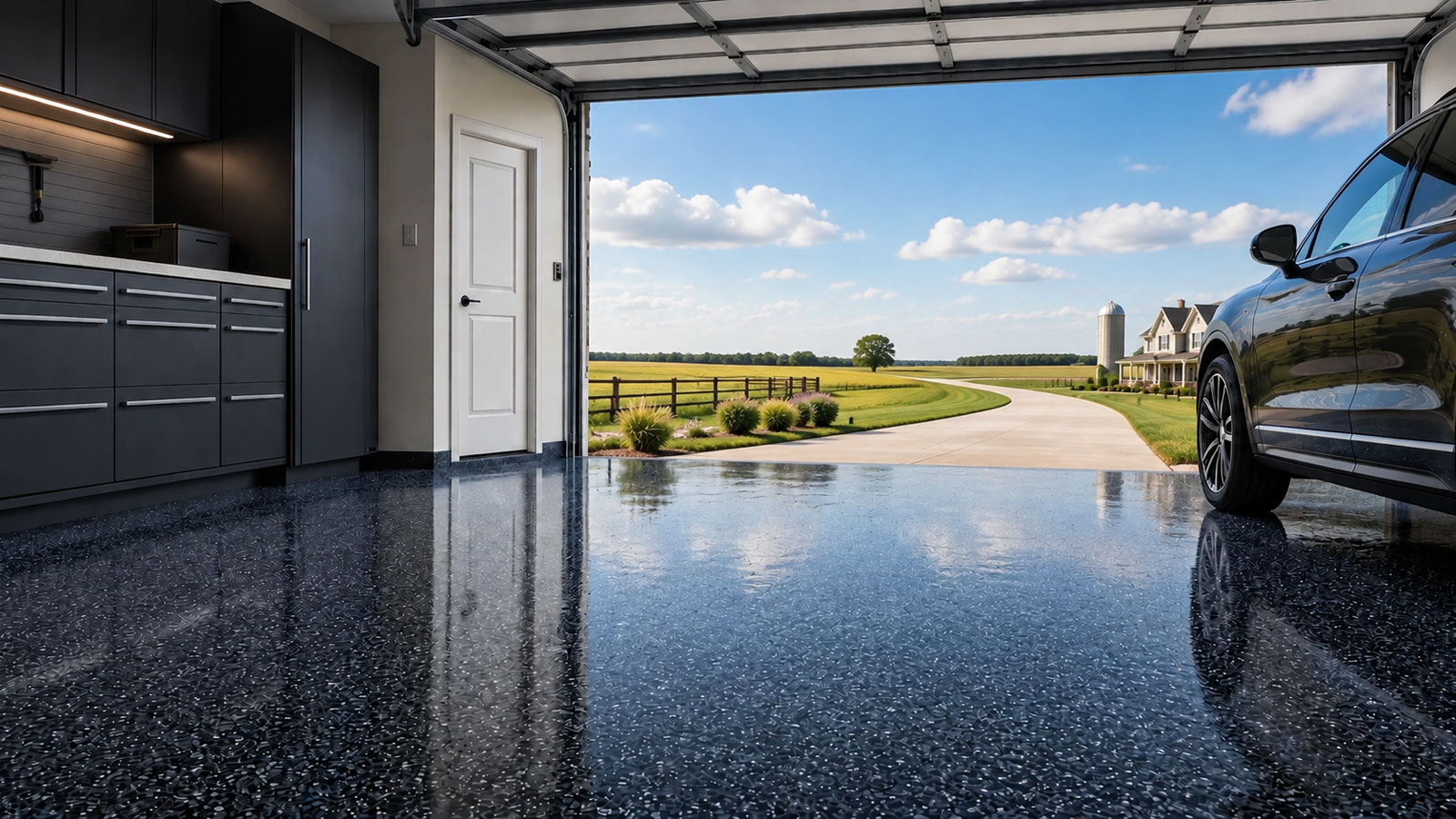
Garage Floor Coating in Waukee, IA
Floor Coating Services in Waukee, IA
Waukee began around the railroad in 1869 and incorporated in 1878, but the modern city has been transformed by very rapid west-metro growth. Its 2024 special census counted about 31,823 residents, up from 23,940 in 2020. Kettlestone and similar growth make garage age relatively predictable in many neighborhoods, but slab readiness is not. A floor poured only a few years ago can still contain curing compounds, sealers, dense finishes, anchor patches and construction residue that need removal.
The 1,500-acre Kettlestone development, started in 2013, was planned for thousands of housing units and illustrates the scale of newer construction around Waukee. Rapid growth also changes drainage as roofs, streets and driveways replace open land. A newer subdivision should therefore be checked for actual grading, downspout discharge and threshold ponding rather than assumed to have trouble-free runoff.
For garage floors, that growth means young concrete is common. The inspection shifts toward curing compounds, sealers, builder patching, control joints, driveway grading, and winter salt rather than assuming a newer floor needs little preparation.
Local Market Insight
Waukee's railroad and coal-mining history is old, but much of today's garage stock is extremely new because of rapid growth and developments such as Kettlestone.
What Affects the Cost of Garage Floor Coating in Waukee?
Waukee's rapid growth means many projects begin with young concrete, but young does not mean coating-ready. Curing compounds, sealers, builder repairs and control joints can drive preparation. New-development grading, larger multi-bay garages, winter residue and return-to-service timing also affect the scope before a finish is selected.
New construction surface treatments
Young slabs may have curing compounds, sealers, dense finishes, or construction residue that require removal. Confirm what builder-applied treatments are present and how they will be mechanically removed.
Control joints and builder repairs
Shrinkage cracks, control joints, anchor holes, and patched areas should be evaluated before coating. Control joints and builder patches should be evaluated before the entire floor is coated.
Rapid-growth lot drainage
New roofs, streets, and driveways alter runoff; check grading and the garage threshold at the individual property. Check driveway pitch and downspouts on the actual lot rather than assume a new subdivision drains perfectly.
Three-car and extended garages
Many newer homes have larger layouts, storage alcoves, steps, or stem walls that add detail work. Three-car bays and storage alcoves add edge work beyond the open rectangle of concrete.
Winter salt and snowmelt
Daily vehicle residue increases the value of a cleanable, properly bonded finish. Winter salt and grit still require regular cleanup after the floor is coated.
Finish and cure time
Decorative flake, traction, topcoat, and vehicle return timing affect the system. Finish and cure schedule should reflect when household vehicles need to return.
Call for a clear, project-specific estimate — or request one online.
Local Garage-Floor Conditions in Waukee
Ask whether the Waukee slab was sealed or treated during construction and look for builder patching or paint overspray.
Check driveway grade after rain or snowmelt. Even new subdivisions can have property-specific runoff concentrated at the door.
At control joints and small cracks, ask how the installer will handle movement and transitions before the coating is applied.
Kettlestone shows the scale of Waukee's recent development
The 1,500-acre Kettlestone district began in 2013 and was planned for as many as about 7,000 housing units along with commercial development.
That scale means many Waukee coating projects involve concrete only a few years old.
Young concrete still needs mechanical profiling and any incompatible curing or sealing material removed.
Kettlestone is not a small subdivision; the 1,500-acre district was designed to support as many as about 7,000 housing units along with major commercial growth. That scale helps explain why so many Waukee coating projects involve recent attached garages. Newness changes the likely prep problem but does not remove it: sealers, curing products, construction residue, control joints, and builder patches still have to be identified and mechanically addressed.
Waukee now estimates its population above 34,000, so the concentration of newer garages is not a temporary edge condition—it is a defining part of the market. That makes builder-era details especially important in estimates: when was the slab poured, was a curing or sealing product used, has the homeowner added a DIY coating, and are there control-joint or patch conditions that need separate treatment before the decorative system begins?
Waukee's older railroad and coal history is a different slab story
The town began on the railroad in 1869 and later had coal-mining activity, including the Shuler Mine operating from 1921 to 1949.
Older in-town properties can therefore have much longer garage, outbuilding, or utility-floor histories than the modern subdivisions around them.
Surface inspection should distinguish those older floors from the newer west-metro garage base.
Waukee’s older core has a much longer property history than Kettlestone-era development. The town began around the railroad in 1869, and the Shuler Mine operated from 1921 until 1949. A garage or outbuilding on an established property may therefore have been added, repoured, or repurposed long after the residence was built. Joints, slab texture, old coatings, and patch lines are better evidence of floor history than the age of the house alone.
Before coating a Waukee garage
- Is the slab recent construction or an older in-town floor?
- Is sealer, curing compound, paint, or coating present?
- Are builder patches, control joints, or cracks visible?
- Does the driveway send water toward the garage?
- Is the garage two-car, three-car, or extended?
- How much winter salt reaches the floor?
- How quickly must vehicles return?
Waukee Garage Floor Coating FAQs
Are Waukee's newer floors easy to coat?
They may need less repair, but proper mechanical preparation and removal of sealers or curing compounds are still essential. In Waukee, rapid growth makes builder-applied treatments a common inspection point even on floors with almost no visible wear.
Does a new subdivision eliminate drainage concerns?
No. Grading and driveway geometry are property-specific and can still direct water toward the garage. New subdivision grading can still direct runoff toward a garage, so check the apron and threshold during or after heavy rain.
Can builder patches be coated?
Often, if they are sound and compatible after proper preparation. The installer should evaluate them individually. Builder patches should be checked for soundness and compatibility rather than automatically coated over.
What is a practical finish for a busy Waukee family garage?
Decorative flake with appropriate traction can balance appearance, dirt-hiding, and easy cleanup. A busy family garage may favor balanced traction and easy cleaning, with cure timing planned around daily vehicle needs.
Why isn't a newer Waukee slab automatically ready for epoxy or polyaspartic?
Recent concrete can still have curing compounds, sealers, smooth finishes or builder residue that interfere with adhesion. Proper mechanical profiling and removal of those materials are necessary even when the floor has little wear or visible damage.
Waukee Neighborhoods & Local Context
Phone Quote Line
Speak with a floor coating specialist about your project and get a realistic estimate range.
(515) 346-6077Typical Project Cost
$3,000–$5,500
Typical range for a two-car garage. Final pricing depends on floor size, concrete condition, prep work, coating type, and finish options.
Helpful Guides
Other Service Areas